Full Mouth Reconstruction for Tooth Restoration

For complete smile restoration, patients can undergo a full mouth reconstruction. Rather than treating one problem at a time, mouth reconstruction is a multi-faceted procedure for restoring your smile. Patients whose smiles are damaged or uneven may feel overwhelmed or even discouraged. Thankfully, modern dentistry offers many solutions for dental restoration.
How a full mouth reconstruction works
A full mouth reconstruction, or full mouth rehabilitation, can comprise multiple treatments. It may enhance the function as well as the appearance of the smile. A dentist will consult with each patient to develop and provide the most effective treatment plan possible. The dental professional may employ an intraoral camera during the examination. This cutting-edge technology enables the dentist to get a comprehensive perspective on a patient's oral health concerns and offer details to make educated choices for the treatment plan.
Tooth restoration options
The treatments that may be included in a personalized full mouth reconstruction treatment plan include:
- Periodontal therapy: The dentist can treat gum disease at any stage and help patients restore their smiles from the roots
- Dental fillings: To treat cavities, dentists use composite resin fillings. After the decay has been removed, a filling repairs the tooth's structure and prevents bacteria from invading the tooth. Composite resin fillings may also be tinted to match the color of the remaining teeth for a more natural appearance
- Inlays and onlays: A molar's surface may be repaired using an inlay or onlay. Onlays are used to replace one or more cusps of a tooth, while inlays are utilized between the cusps. When a filling would be inadequate, but a crown would be excessive, these restorations are usually the best option
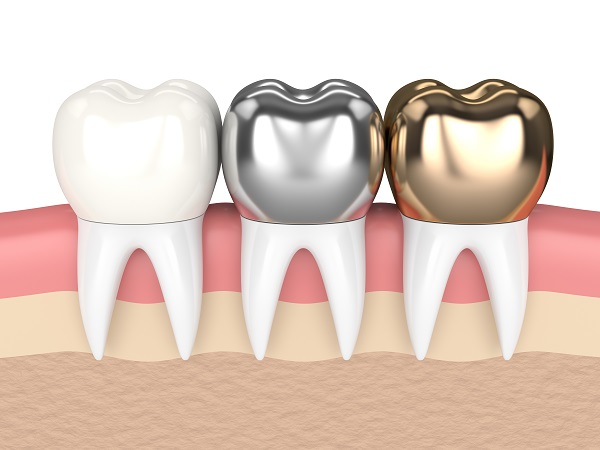
- Dental crowns: Dental crowns are placed over the whole damaged, cracked, or decaying tooth to fortify it against additional damage. These restorations are utilized to restore structure and protect an injured or damaged tooth that requires greater stability than a filling, inlay, or onlay can give. Crowns may also be used in combination with a dental implant to replace a single lost tooth
- Bridges: Bridges are a kind of tooth replacement for patients with one or more missing teeth. Traditional bridges consist of crowns that cover the teeth on each side of the gap, with a prosthetic tooth in between to give the impression of a continuous bite. Bridges can also be anchored to dental implants for better stability
- Dentures: Dentures are a kind of tooth replacement that replaces multiple missing teeth. The dentist may recommend a partial or complete denture depending on the number of natural teeth still left on the jaw. Partial dentures, also called detachable bridges, are fitted with metal clasps connecting them to neighboring teeth. Dental implants can also support dentures
Ready to schedule an appointment?
The dentist can design a full mouth reconstruction plan to make restoring your dental health as simple, effective, and economical as feasible. Reach out to our dental office to set up an appointment and discuss your treatment options.
Request an appointment here: https://www.pearldentalsanjose.com or call Pearl Dental San Jose at (408) 599-5002 for an appointment in our San Jose office.
Check out what others are saying about our dental services on Yelp: Full Mouth Reconstruction in San Jose, CA.
Related Posts
A general dentist will tell you that the habits you develop play a vital role in the quality of your long-term oral health, and good daily habits can significantly reduce the risk of cavities, gum disease and other common oral health concerns. By understanding the most effective habits and making an effort to implement them…
Dental crowns are the most popular way to restore teeth that are in bad shape due to decay, injury or other imperfections. Modern-day dentistry has allowed for the evolution of many different material choices, all of which offer their own pros and cons. Keep reading to learn about three options that general dentists recommend. Outlined below…
It is essential to visit a family dentist every six months to maintain proper oral health. While it is possible to keep the teeth and gums suitably clean with appropriate brushing and flossing techniques, excellent home care is never a substitute for professional cleanings and preventative care. However, there are more benefits to routine dental…
Many patients wonder about the differences between an Invisalign® dentist and an orthodontist when considering Invisalign treatment. While both professionals can offer Invisalign services, there are important distinctions between the two that may affect the treatment process. Understanding these differences is crucial for selecting the right provider to ensure optimal results and a smooth experience.The…