How Is the Implant Supported Dentures Procedure?
Considering choosing implant supported dentures as your new denture choice? There are many different types of dentures you can choose from nowadays, making it a good idea for you to understand how each type works so you can make a choice that is right for you and your lifestyle
What are implant supported dentures?
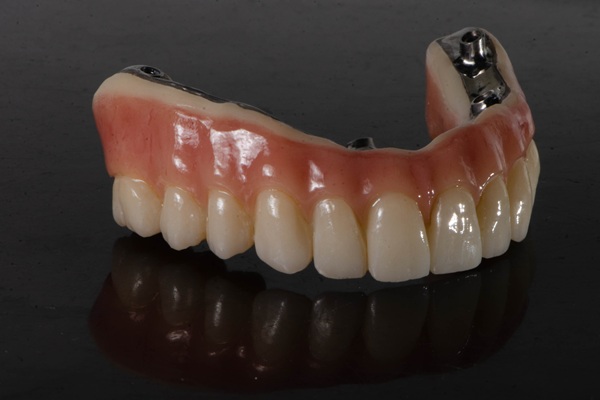
Learning what implant supported dentures are and how they work allows you to know whether this denture choice is right for you. This denture differs from other types in that they are attached to the gums, held in place using a few strategically placed dental implants. This means that this denture always stays in place, giving wearers the peace of mind that it will not fall out.
The implant supported dentures procedure
The information below is about the procedure of placing implant supported dentures in one’s mouth.
Consultation
The first step is making an appointment with a dental professional in order to understand where the dental implants will be placed. This is done by taking impressions of the patient's mouth, as well as undergoing a CAT scan or any necessary X-rays. This is the time for the patient to ask any questions they have about the procedure, as the more they understand, the more likely they will experience a successful surgery.
The first surgical procedure
The next appointment is when a patient undergoes their first surgical procedure of having their dental implants placed. This requires a dental professional to make a small incision in the gums in order to insert the implant, which is closed using one or two stitches. After this first surgical procedure is over, the patient needs to wait between three and six months before undergoing a second surgical procedure.
The second surgical procedure
A second surgical procedure is necessary in order to expose the implants so a healing cap can be placed on the implant in order to guide it into its correct position. Healing caps need to be worn for a couple of weeks before they can be replaced with regular dental abutments. The dental professional will then make another impression of the patient's mouth in order to begin creating the dentures.
The final step of the procedure
There are two different ways that implant supported dentures are held in place. The first is by using a bar attachment, and the second is by using a ball attachment. Patients who are not sure which option is right for them can ask their dental professional for their advice. Once the bar or ball is attached, any necessary adjustments will then be made to make sure that the dentures fit exactly as they are supposed to.
Have you decided this denture choice is right for you?
Now you understand more about this denture and what is required when you choose dentures that are supported by strategically placed dental implants. If you are ready to get the process started, contact us now for more information.
Are you considering implant supported dentures in the San Jose area? Get more information at https://www.pearldentalsanjose.com.
Check out what others are saying about our dental services on Yelp: Implant Supported Dentures in San Jose, CA.
Related Posts
For patients missing multiple teeth, All-on-4® dentures are an excellent restorative option. These implant-supported dentures can transform a patient's smile. Many patients prefer this type of denture, as it is more secure and natural-looking than a regular denture.Before committing to this procedure, patients need to understand the process. The dentist should explain the benefits of…
Dental bridges are a reliable solution for replacing missing teeth and restoring a complete smile. With several types available, it is important to understand the options and choose the one that best meets your needs. A general dentist can explain the different types of bridges and guide you toward the most appropriate choice.Dental bridges are…
A general dentist will tell you that the habits you develop play a vital role in the quality of your long-term oral health, and good daily habits can significantly reduce the risk of cavities, gum disease and other common oral health concerns. By understanding the most effective habits and making an effort to implement them…
For complete smile restoration, patients can undergo a full mouth reconstruction. Rather than treating one problem at a time, mouth reconstruction is a multi-faceted procedure for restoring your smile. Patients whose smiles are damaged or uneven may feel overwhelmed or even discouraged. Thankfully, modern dentistry offers many solutions for dental restoration.A full mouth reconstruction, or…